02
Why your automation keeps breaking
Traditional automations are brittle by design. One field changes, one edge case appears, and the whole chain collapses. There's a better way.
Elena Voss
6 min read
Let's dive deep:
You set up a Zapier flow on Tuesday. By Thursday, it's broken. A field got renamed. An API changed its response format. Someone added a new status to the dropdown that didn't exist when you built the trigger.
This is the fundamental problem with rule-based automation. It works perfectly in a world that never changes. Unfortunately, that world doesn't exist. Real operations are messy. People rename things. Processes evolve. Edge cases multiply. And every time something shifts, your automation doesn't adapt - it just stops.
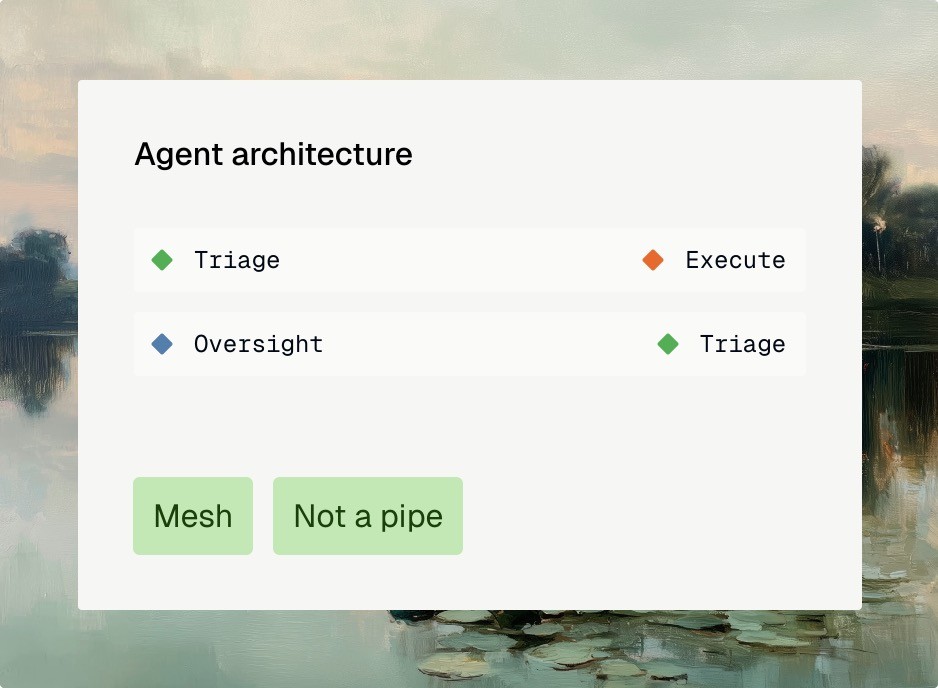
The difference with agent-based workflows is that they're built to handle ambiguity. An AI agent doesn't just follow a script. It understands intent. When a refund request comes in with a slightly different format, a traditional automation fails silently. An agent reads the context, matches it to the right pattern, and processes it - or flags it for a human if confidence is low.
"We had 14 Zapier flows running our onboarding. Nine of them were broken and nobody knew. Relay replaced all of them in a week." — Tom Alcántara, RevOps Lead at Formatic
This isn't about replacing your existing tools. It's about putting an intelligence layer on top of them that can absorb the chaos your team deals with daily. Relay connects to the tools you already use — Slack, Linear, Zendesk, your CRM — and runs the workflows between them. When something changes, the agent adjusts. When something truly novel appears, it escalates.
From the Relay team